And so it goes… I have begun to meet with the newest cadre
of RAs for the 2012-13 academic year.
Once again, I will meet with the new NYUAD RAs hired from our NYU pool
in addition to the 160+ new RAs from NYU Washington Square. I am always amazed at the depth of their
thinking, goals, aspirations, and journeys on this earth. Each one brings a unique perspective to why
they are who they are as individuals.
Their family heritage, personal challenges, and secret indulges are
thoughtful, sometimes funny, but always honest.
Today I was asked what percentage of students I meet with say they know
what they want to do with their lives. I’d say it has dropped a small bit, but
it still seems to be in the 60-70% range.
I met with another newly hired RA who discussed how smiles have changed
her approach to life. I am always amazed
at how much the little things in a student’s life impact their decisions and
also their drive. So next time someone
asks you “you have a minute?” know that one minute could actually be one that
changes another’s life! Let’s start the
new reading year with some great books.
Happy reading all!
Monday, May 28, 2012

Tuesday, May 15, 2012
Spring RA Book Club: The Shadow of the Wind

For the Spring 2012 RA Book Club, the RAs chose to read The Shadow of the Wind by Carlos Ruiz Zafón. This book quickly became one of my favorites! Below are the reviews from the RAs.
Malina - What a wonderful adventure! A mystery,
romance, coming of age all in one beautifully crafted novel. This book was a
joy to read, it was easy to read and quickly enraptured the reader. This book
is written beautifully in a stylistic but again, understandable and easy to
relate with way. This mystery will quite literally keep you turning the pages.
Re-discover what it felt like to be innocent and to fall in love from the pure
mind of Daniel, as his life entwines with the surreal Julian Carax, an author
of a very important novel. There is nothing more I can say without urging a
reader to pick up this adventure and enjoy it. I hope you love it.
Katherine - I absolutely love Shadow of the
Wind. Though there were some minor flaws in the book--the ease with which
Daniel obtained information, Fumero's consistently evil character and the
drastic personality switches throughout the book--I stand firm in giving it a 9
out of 10. Even if the content fell short, the lovely imagery and language kept
up intrigue which is all the more impressive for a translation. And personally
I don't even believe any of these flaws
negatively impacted the content because I was always interested to read
more. Especially towards the end, when I could not put the book down at work
and kept making gasping sounds. I'm so glad this book was chosen!
Justin - Shadow of the Wind instantly
became one of my favorite books. The beautiful and expressive language of
the author coupled with the intriguing plot of mystery and romance made this
one a page turner; I could not put it down. The story unfolds like an
elderly person gingerly opening a beautifully wrapped gift with each and every
page revealing a new part of this masterpiece. The twists and turns
magnify the character's personalities and highlight the keen word and theme
choices by the author. Overall, this was an amazing book and something
that I would recommend to anyone looking for a truly magnificent read.
Nafeesa - Shadow of the Wind was an
exciting, fast-paced, fantastical novel that had many enjoyable moments.
However the book seemed to be unable to make the jump out of fantasy into
something tangible and relatable. While I enjoy escapism, the writing was too
overtly poetic, as was the plot, for me to find myself immersed in it. I found
myself always on the outside, being told a story rather than living the story
myself. I appreciated many elements of the novel but I think Zafon would
benefit from employing subtlety and perhaps a little less dramatic fan fare
than this book exhibits. It was nonetheless a quick, page-turner that will no
doubt thrill, scare and move the reader to tears.
Addie - The Shadow of the Wind was one
hell of a whirlwind- a story about forbidden longing, dishonesty, the
love of books, and the realization that no one is immortal. My favorite
character was probably Fermin because although he went through so much pain and
suffering in his past, his love for life and his resilence was so potent and
genuine. I also think he was one of the most developed characters. Overall, I
gave this book a 8 1/2 out of 10 because it really was able to captivate me to
delve into this ever-twining story of multiple stories, which were all told so
beautifully.
Maria - The Shadow of the Wind was an
absolutely beautiful read. It encompassed everything you could want in a good
book: history, mystery, romance, complex characters, beautiful imagery, and the
like. I thought Zafòn developed his characters beautifully, and Daniel's growth
from a lovesick boy to a interesting yet sometimes difficult to like character
seemed to perfectly capture the maturation process of a boy growing up during
the Spanish Civil War. Daniel was the epitome of a teenager throughout, talking
back to his father and falling in love quickly, but also encompassed all of the
qualities of an independent adult due to his unique upbringing. He was often
curious to the point of being manipulative, but he had a strong support system
around him that put him in check when needed.
The Shadow of the Wind is incredibly relative to almost anyone and, judging by the almost-universal love of this book by our book club, everyone can gain something from it. It was an excellent choice!
The Shadow of the Wind is incredibly relative to almost anyone and, judging by the almost-universal love of this book by our book club, everyone can gain something from it. It was an excellent choice!
James - Despite its eloquent language and
well-developed main characters, The Shadow of the Wind concocts a
storyline too complex to have any chance at making its author’s hand
invisible. The story twists and turns down the streets of Barcelona,
following a young boy’s quest to uncover the mysteries of a forgotten
author. Throughout his journey, he encounters a multitude of “throw-away”
characters, and after a short while the story becomes too fantastical as
everywhere he turns he uncovers exactly what he is looking for with ease.
There are no roadblocks along the way, causing the author to instead implement
his own sort of obstacles to almost prove to the reader that this young
boy is getting as far as he does. Despite the unrealistic nature and
transparency of the text, at the end of the day it is still a story, and a good
one at that. Some of the sentiments and “life lessons” that come up along
this young boy’s quest – particularly those regarding love and loss – truly
speak to the heart, and this story can be an emotionally moving one for some.
Ashwini - While Shadow of the Wind by
Carlos Ruiz Zafón was indeed a novel filled with murder, mystery, and romance,
it fell short for me. Though the premise, a young Daniel falling in love with a
rare book someone is bent on destroying and tracking the history of its obscure
author, was quite interesting, the storytelling had distracting character
pitfalls. The author took shortcuts by conveying important developments in the
story as flashbacks, letters, or manuscripts rather than as actual events or
conversations between characters. Though I did find myself very engaged while
reading these parts, I think this freeze-framing of the characters while major
parts of the mystery unfolded resulted in underdeveloped characters. The story
failed to believably account for the actions of the primary antagonist, Inspector
Fumero, which at the end, resulted in a plot hole. Though I’m still glad I read
the book for some of the conversations it sparked, I wouldn’t recommend it with
enthusiasm.
Friday, April 27, 2012
Fall RA Book Club: My Name is Red
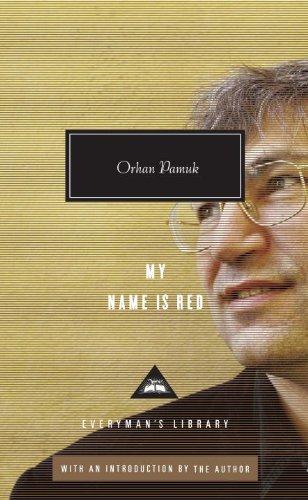
I read and posted about this book on December 11, 2011. Below are the reviews from the RAs.
Katherine - I wish I knew Turkish and could read the
original version because it takes about 10 pages to really get engrossed, but
after that point it’s incredibly flowery and descriptive. It was really
interesting to watch Black’s obsessive personality come out. I mean it was
always underlying with his love for Shekure and then his need to see the final
painting that he and Enishte created. I actually found this comical. It was so
interesting because he had already created it and knew what it looked like at
the time but then started doubting everything and had to see it again. It was
as if he no longer could even trust himself and his profession which he had
been doing for so many years. Honestly I felt that the entire plot with the
killer was not very important. For most of the book I completely forgot that
the underlying message was a murder mystery. Rather I was focused solely on the
descriptions of each character. Pamuk did a wonderful job creating these
characters and showing their evolutions throughout the novel and he did it
through an exciting way of both personal accounts and the descriptions of
others.
Justin - A story involving multiple plot lines, a
hard to follow story, and one more thing...about 20 narrators, My Name Is
Red offers an intricate read for the advanced reader. Be warned,
this is not a "pick up, put down" book, but one that must be read in
long chunks. The language was beautiful, but for me, it just wasn't a
page turner. Too much detail on parts that should have been two sentences
and vice versa. My Name Is Red can be a good book for some, I
just was not feeling it.
Ashima - My Name is Red has a case of
the greedies: it seems as if Orhan Pamuk bit off more than he could chew. The
density was intimidating at first, but it quickly turned to off-putting. He had
written sentences, but he wasn't saying anything. The prose poses more as a
work of art, florid and metaphor-laden, than it serves as an effective vehicle
for storytelling. It could be due to the fact that it is originally written in
Turkish, but I'd love to hear from a native speaker who read the book- was the
celebrated beauty of the novel just lost in translation?
Addie - When reading the book, My Name is
Red, I had a feeling that I was constantly behind and never ahead of the
plot. I know the author was definitely toying with the notion of portraying a
piece of art within an art, however I felt he may have been trying so hard for
the reader not to know what was happening, that in the process he may have lost
the reader almost completely by not getting or "hitting" pivot plot
reveals at particular moments in the story. Also the notion of the translation
from Turkish to English was fascinating to me because I think it informed for
me, as an native American-English speaker, some things I would be unfamiliar
with culturally that would advise me to research and look things up about the
Turkish culture. Overall, although I wasn't able to enjoy all aspects of the
story (or the multiple stories in this case), I was glad and appreciative of
the discussion we held in the book club that helped me develop better
depictions and background on the characters.
Swati - The premise of the novel is extremely
interesting - a murder mystery set in early Turkey/Persia. Very well researched,
My Name is Red taught me a lot about miniaturist culture in Persia,
something I previously knew nothing about. The story itself, however, was
confusing. With a murder mystery, it is important to keep the readers guessing,
but only to a certain point. Pahmuk takes a lot of detours in trying to get to
his point, a point which, at many times, gets completely lost in everything
else he says. It seems that he was trying to get too much information across to
the reader, without fully clarifying and explaining his story, leaving the
reader confused in a sea of explanations that don't quite fit together.
Not only that, but the actual prose of novel is dense without purpose. Pahmuk
uses many beautiful sentences, but they seem to have no purpose in the plot or
ambience of the novel. One saving grace of the novel was the characters, of
which there many. Because he wrote in the voice of each of his characters, I
was able to understand and relate to many of them. I thought Pahmuk's approach
to writing the murder mystery was really great. Overall, however, the novel
came across to me as confusing and slightly pretentious - I like his general
writing style, but this particular novel didn't have a good flow, as far as I'm
concerned, and I'm pretty sure I still have no idea what happened at the end.
Nikhita - Orhan Pamuk's "My Name is
Red" is an unexpectedly good read. Told from the perspectives of different
characters, sometimes nonhuman ones even (Satan, coin, the color red, etc.),
this book is well-written and extremely descriptive - probably alluding to the
occupation of the main characters as miniaturists (a specific type of painter).
From the first page, where you find out that the narrator is speaking from the
grave after being murdered, I found myself recalling another book, Lovely
Bones, which also commences in the same fashion. However, Pamuk's book carried
out much differently and though at first glance appeared to be a murder
mystery, actually turned out to be much more. Elegant Effendi's murder was
simply the lens by which to examine all of the other characters, who are each
unique and interesting in their own right. As we are pulled into story after
story, the novel becomes increasingly dramatic and ends in a surprising twist.
All in all, a fantastic book and definitely understandable for a pick as a
favorite R.A. novel.
Malina - First, I must say I love reading.
Books are stories, they're snippets of real life that I can take on when I am
tired of my own. I love reading, getting lost in stories and characters and
different times. But, sometimes I don't enjoy a story for one reason or
another, maybe it was too long or not engaging or I felt suffocated by the
density of the text. My Name is Red was suffocating. Though I am sure many
enjoyed this tale, I found it difficult to read and finish within the time our
book club alotted. Indeed, to be fair - I did not finish the book.The
characters were not easy for me to identify with, but I will give this book a
fair trial this summer.
Sunday, February 12, 2012
No One Writes to the Colonel

Thanks to Alejandra Fernandez, a former RA, who sent me another great Gabriel Garcia Marquez book to read. This time a collection of short stories called No One Writes to the Colonel. Marquez is adept at bringing in the reader to a time and place of the “salt of the earth” South American. The marriage struggles, the hard times, etc. are all captured in this one. I loved the humor, especially in the title story (same as the name of the book) and Tuesday Siesta. There are themes that run across all of the stories and some of the characters re-appear from one story to another. The government and how it plays a role in continually “taking” from the people for its own gain is a mantra that my own wife’s family felt growing up in Argentina. Marquez paints experiences through his works. His characters are real; people you would find on any street corner in any city across the globe. Survival even through the extreme level of poverty hits many of the characters, even when on her deathbed, Big Mama won’t let stop clutching the jewels that had been left to her knowing they will be pawned by her relatives as soon as she is in the grave. A simple, but complex cast of characters. I really enjoy his storytelling. Very nice read!
Saturday, February 11, 2012
This Book Will Save Your Life

An interesting title for a book that I thought was a self-help book. The title of the book is This Book Will Save Your Life, written by A.M. Homes. It was a recommendation from one of my colleagues at NYU, Anna. I had certain expectations going in, but quickly realized this was about a main character, a fifty-something old man named Richard Novak. Richard has been divorced for some years, has a 16 year old son, and moved away from NYC to LA to escape his life and responsibilities. Richard has removed himself from everyone around him and the book begins with his “mid-life crisis” which brings him to the hospital in great pain. After his own release, his life really begins. He engages with all kinds of people, faces lots of strange experiences, and faces his fears – his son, his ex-wife, the aging process, and the fact that to pay attention means you engage with others, and maybe, just maybe, help some other folks along the way. Richard’s reclusive nature has made him a rich man, always watching his investments. He lives in upscale Cali, though needs to relocate temporarily because of a sink hole next to his house. His journey includes, saving a horse from the sink hole, saving a woman who sends an SOS from the trunk of a car after being kidnapped, saving a drowning man at a party, and then letting his son open up and be saved – especially after his interaction with a high-powered movie exec (former CIA agent) who physically assaults him. Richard is a man who needs to be awaken from a world that is passing him by. He finally does through a series of helping others, even the doughnut shop owner. This is a wild story with characters only found in Cali, Hollywood that is. I’d say it doesn’t really come neatly to an end, even though there is personal growth and connection from a guy who you just don’t believe will or could open up. A great deal of “unbelievable” over-the-top things happen throughout. A mixture of the unbelievable and a stretch to the “warming of the heart,” but I just didn’t get there. A little bit too much “everything and the kitchen sink”-type story. The dad/son story was pretty compelling, but I got lost with most of Richard’s other relationships and how they connected to his journey. A range of emotions and characters wrapped up in a format that had no chapter breaks. How could I stop for a meal break? OK, not the best, but a light read for sure.
Tuesday, February 7, 2012
The Silent Land

There aren’t a ton of books that you start and can’t put down, this was one of them for me. Thanks to Lisa for the recommendation. The Silent Land by Graham Joyce has just two characters, a husband (Jake) and a wife (Zoe). They go away on a romantic weekend in the Italian mountains for a ski trip. The book begins with an avalanche where both characters seemingly are covered by the snow. After a miraculous escape the real action occurs…. Or does it? When Zoe and Jake get to the hotel at the bottom of the hill after their escape they find the beautiful accommodations….. empty! Is this really happening? I got the Stephen King feeling reading this one. Weird things start happening. Zoe and Jake try to escape, but they seemingly can’t escape the mountain. Being alone in the world, the two alienate each other, share moments of exhilaration, and start to question everything about their relationship. Add the complication that Zoe is pregnant. Think about being alone in the world with the person you love, in a place that is beautiful. Lose the fear and just enjoy… but how long will that last? There is a surprise twist in this one, which I won’t give away. I enjoyed the mystery, is it real or a dream? Some beautiful moments, including the last scene of the book. Short, quick read. Well worth picking it up! Thoroughly enjoyed the book, though Jake was a pompous ass as a husband, huh?
Sunday, February 5, 2012
The Secret Lives of People in Love

What a wide range of emotions and feelings that the reader experiences reading The Secret Lives of People in Love by Simon Van Booy, an adjunct faculty at the School of Visual Arts, right down the street from NYU! (Maybe I’ve passed him on the street.) The book contains nineteen short stories outlining situations of missed loves, loves that no longer exist, missed opportunities, and ships that connect in the night. There were certain themes that returned time and time again. During some stories I was saying to myself, “déjà vu? Didn’t I just read that story?" Many of the characters were carbon copies of each other with repeating story lines, but with different characters. I started to fall asleep a bit as the stories unfolded and I neared the end of the book. To be honest there were only 3-4 of the stories that actually moved me as someone who does love others. My favorite was the story (As Much Below As Up Above) of the man who was asked to leave the submarine to help the tug pulling it, and then the submarine falters and all of his friends he left behind die. The story captures how “happenstance” things really are and one person’s survival is just a lucky turn of fate. In Little Birds, a young girl separated from her parents at age three (she gets on a train by accident as her parents watch her disappear) and never see them again. She lives with the owner of a porn shop who plays the role of parent and puts together a whole new story of a life for her. Is it a film of fiction that he now creates for this young “dove” or is it real? And my favorite of all, Snow Falls and Then Disappears, a pretty picture of how two loves connect on another level when worlds don’t always intersect, a man married to a deaf woman. Emotions are hard to create among readers and I think Van Booy’s book is very much hit or miss. The nice thing is that the stories are short enough that if you don’t like, no worries, it is almost over. I’d say read the three I suggest, the others, only if you have some extra time. Disappointing overall.
Saturday, February 4, 2012
Miss Peregrine’s Home for Peculiar Children

Imagine being a young 15 year old, not connecting with others, ostracized because you believed your grandfather’s stories about his friends from a far-away island, an island that contained seemingly strange children? That is the lead in to MissPeregrine’s Home for Peculiar Children by Ransom Riggs where Jacob Portman shares the impact that his father has on his life, and continues to have when his grandfather is killed in the backwoods of his home. Was it self-inflicted wounds? Was it from a pack of feral dogs? Or was it by some monster that Jacob thinks he sees, though his friend who was with him doesn’t…. this sets the stage for Jacob’s hospitalization. Is he crazy? His parents, the police, and his only friend think so. And now the journey begins. In his dying words to Jacob, his grandfather shares a few cryptic last words about things for Jacob to look for after his death. It isn’t until Jacob’s 16th birthday party when his aunt shares a book that his grandfather had left for him that he understands he needs to find out about his grandfather’s heritage and the strange cast of characters that were shared with Jacob throughout his childhood. Jacob’s psychiatrist allows his father and him to visit an island off the coast of Wales (Jacob’s father to do some bird watching for his newest book and Jacob to find the hidden secrets). I really enjoyed the cast of characters that Jacob found and how he connected to his grandfather, both outcasts in their respective circles. Jacob finds more than he bargained for, especially a day of infamy, September 3, 1940, that goes over and over. Loops? Peregrines? Whites? There is mystery and intrigue at every step. A great kid's story – every kid wishes imagination never ended and usually when we are old enough to fall in love for the first time it does, but not in this one. A wonderful story that has you wanting to never put the book down. Thanks Lisa for the suggestion. I won’t tell you what happens for Jacob who in the end needs to make the decision to leave this world for love and for the salvation of the peculiars. Pick it up!
Wednesday, February 1, 2012
This is your Brain on Music

It’s now time for bonus favorite book time, this is the beginning of many short takes on books I read from friend recommendations. I will be reading these recommended books until new RAs start visiting me in late spring/early summer. Today’s book, This is Your Brain on Music by Daniel Levitin, is exactly as it sounds, a review of how music impacts the brain. Levitin begins with an intro that provides the novice music teacher wanna-be a lexicon of music definitions such as: timbre, contour, loudness, reverberation, meter, key, melody, cadence, diatonic, you get the idea. Levitin utilizes many of the 40-somethings favorite songs to explain each of these terms, such as Dark Side of the Moon, Back in Black, Every Breathe You Take, Sledgehammer, and I’m on Fire by Bruce Springsteen. Why do we remember voice more than facts? This book is all about how music impacts our brain. Why does music make my feet tap? Why do I like the type of music I like? Why does music trigger certain memories (i.e. how do we connect life experiences with certain music)? Not only is the book understandable for the “lay musician,” it is written with great examples (songs I remember and LOVE). This is an in-depth investigation from a music guy turned “music scientist”! We learn about Levitin’s ascent from high school band geek into the classroom of Stanford and MIT. Levitin really does his work on the subject with a who’s who in his literature review. Academics will respect the work, music lovers will learn a great deal of “what’s behind the music!” Pick it up, worth a listen down nostalgic road.
Sunday, January 29, 2012
End Malaria

Thanks to one of my twitter followers, Ryan the RD, I was able to receive another Favorite Book. End Malaria is a compilation of short reflections by all types of people on how to think, act, and develop a philosophy and action plan for life. The book was created as a means to raise money for the pandemic caused by malaria in South Africa (all of the proceeds go to purchasing nets for the families in Africa). This is a 2011 edited book, with brief bios from the various authors. The four sections of the book include: Tap Your Strength; Create Freedom; Love and Be Kind; and Disrupt Normal. One of the reflections was by a former NYU teacher (I took his course!), David Rock, who taught in the Life Coaching program. He writes about the impact of neuroscience on behavior. Did you know that positive comments and images have an impact on us, but that impact is not as big as the effect of negative statements and images on people? Wow, it does matter. Another notable contributor is Tom Peters, author of the Pursuit of Excellence. The book weaves in social media and its impact on our brand and our thinking. I found it to be a very motivating quick read. Each bio included their twitter account and website, how cool is that? Some take-aways from the book include: “Anything worth doing will be filled with uncertainty,” "Courage is simply acting in a way that puts you at risk in a fearful or uncomfortable situation in which the outcome is uncertain,” "Do it yourself – Do it with Peers – Do it with Technology." My particular favorite concept is one I thought I created, but clearly not… "who is on your 'Board of Directors' for you creating your plan for the future." The book’s cost goes to charity, plus some really tangible things to DO to make change in your life, why wouldn’t you want to read this one? Go get it for anyone who has ever dreamed big!
Subscribe to:
Posts (Atom)