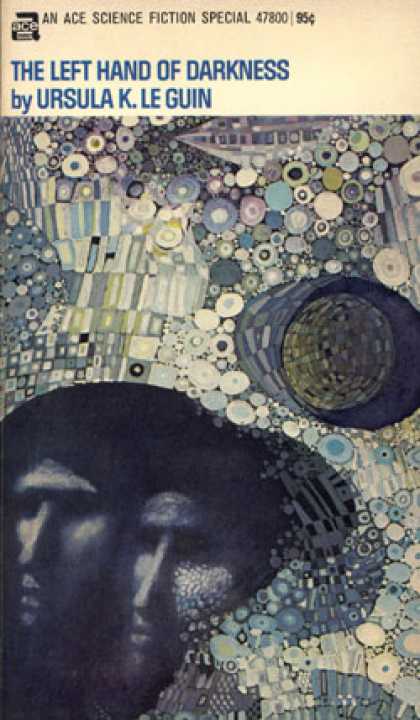
Back to the sci-fi genre, this time The Left Hand of Darkness by Ursula K. Le Guin. I guess I will out myself early in this description, I didn’t like it. Set in the fictional universe of Hainish, taking place around the year 4870, where those that inhabit the planet are neither male nor female and have urges once a month. Why didn't I like it? Because I guess winter all the time has something to do with it, or maybe I don’t know, because it didn’t interest me. Sci-fi is an acquired taste for sure, and this one didn’t draw me in at any point. The strange names of characters and planets only served as a block for me as I was constantly trying to keep it straight. Ice Age travel, sex once a month, culture, and politics, oh my! Ai held captive, saved by Estraven, and trying to get to Karhide but must battle the hyper cold weather to get there. They finally do, but Estraven is killed after having a “close sexual encounter” with Ai. Oh well, no fear the bisexual (I guess we would call them all that?) relationship is thwarted by the suicide of Estarven, well he ran into the military guard (who were searching for the escaped Estarven), and is killed. Poor Ai, alas happy for me, it’s almost over! More family gathering when they find Estraven’s body in Ai’s arms. This one didn’t really have the interest and foundation for the story to be developed. A few better favorite sci-fis for me. Take a pass, luckily not a long read.
Thursday, March 31, 2011
Wednesday, March 30, 2011
Manchild in the Promised Land
An autobiography written by Claude Brown, Manchild in the Promised Land tells Brown’s story of growing up in Harlem in the mid-late 1950s. Hard to believe it is now considered a “period piece” as it is rooted in the first generation of urban “ghetto” life – the struggles with drugs, sex and violence. Brown’s language was the “present day” slang of the time (I haven’t heard the term “cats” since Josie and the Pussy Cats – remember that cartoon? It refers to a person within a music group, not an actual cat, in case you were confused). The book reminded me a great deal of a book I read recently, Makes Me Wanna Holler – a view of the 1970s in Virginia. Woman were treated poorly, drugs were flowing and seen as the job to land a buck. Role models were not present. This book jumps around Brown’s early life, from being shot at and to his decision to leave Harlem and get a high school diploma. I will say that the “transformation” process to leave the life of violence and drugs was not explained well – I thought that it could have served as a learning process for others to reflect upon, just didn’t seem to connect the dots for me, ie why he left that life behind. The juxtaposing of Brown’s life and outcome with his brother, Pimp, provided the realistic picture that it is completely unclear how one person chooses to make decisions to save their life and those who fall as victims of the system. How come one person makes it and another doesn't? Brown’s father had no redeeming qualities and made me angry to think he was able to get away with the beatings of all family members. The cover of the book talks about how inspiring Brown’s character is for the community, I just didn’t feel it. I wish the transition was more detailed. I would have liked a bit more about what learnings, if any, happened during his time in the South and also in the reformatory schools. Overall, something was missing. It was as if I was jettisoned into Brown’s life for a few moments, missing the dots connecting the ending and his decision making process to escape. Good overview of the Harlem life and the “tipping point” to what it became in the 1960s. Overall, ok, not as much under the surface as I would have liked. Not a top choice read.
Sunday, March 27, 2011
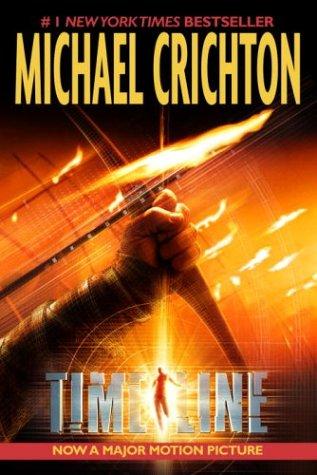
Timeline
Fun to read a thriller which glimpses a bit into the future, and also the past. Michael Crichton’s Timeline tells the tale of academics who get a chance to time travel back to the Middle Ages, 1357 to be exact, to find a lost professor who had been a “capsule to the past” in a previous trip. The book chronicles the greedy self-made millionaire and owner of ITC, Robert Doniger, and his companies’ research with “time traveling” and the various staff he used to improve the process (mostly former employees who are now dead because of it!). The quantum technology delivers 4 researchers to travel to Dordogne in the year 1357. The researchers land in Dordogne and their adventures begin, not as they expect! They take on new personas in the age of war, intrigue, and leadership of the time. Back at the home front at ITC, Doniger is trying to sell the past into a money making operation for him and even thinks he can leave the researchers and the lost professor back in the past. Luckily there are a few honest ITC workers who go against Doniger’s wishes, but then they realize there are only 48 hours to transport the group back… what will happen? The clock ticks for the remainder of the book. Will they make it back? Will they be deformed as others who tried to travel back to present day come back unscathed? Crichton’s on his game. Lots of moment to moment intrigue. Reminded me a great deal of the Dan Brown books, which I actually liked. Fast read, though pretty long book. I listened to this one while traveling with son to visit colleges! Add to the list.
Friday, March 25, 2011
Orientalism
I finished this book on our way to visit colleges with my son Alex. For anyone interested in a Eurocentric view of the world that attempts to change that view, read Orientalism by Edward Said. With all of the work we are doing at NYU Abu Dhabi and my piqued interest in the Middle East, Said provides a thoughtful, albeit in some ways a dated view (how much changes in 30 years!) on the current issues related to the Middle East and the West (which he is referring to all of Asia and the Middle East). Said breaks the book into three parts, The Scope of Orientalism, Orientalist Structures and Restructures, and Orientalism Now (which ends in 1978). The book helps the reader understand the beginnings of the prejudice towards much of the Middle East, specifically the Arab world. We learn of how the East (Britain and France) ruled much of the territory and how their influence played a role in how the West views the “Big Bad” East. In the first part of the book different leadership of the West places a poor portrayal on the people, the customs, and the political directions of the countries and refers to them as inferior. The second portion, my least favorite, focuses on the academics and scholars who ventured to the area and reflected on their experiences of the land. The last section gives us a more recent view on the East with the changing landscape as oil plays a pivotal rule in what we (the West) need from our “new friends” of the East. How the US becomes a power and has been linked in assisting the East as it is today. From a social-scientist point of view, this is a terrific read to give a perspective on how the world has become smaller and reliant on a territory of the world that was for many centuries ruled by the West. Said’s work is seen on the whole as an important study that bridges the past with today and why the East is the way it is with the West. Very academic book, so if you are looking to be entertained, skip this one. If you want to learn a bit, this one is pretty good!
Wednesday, March 23, 2011
Blood Meridian
Every once in a while you read a book and you say, it may be a good read for someone, but not me. This is clearly the case in Cormac McCarthy’s Blood Meridian. The story is about “the kid” from Tennessee who is a runaway in the 1830s. The kid, who is aged 14, meets up with the “Judge” at a revival meeting. The kid meets numerous folks along his journey, joining up with a group of scalphunters led by Joe Glanton. The trip takes the group, which ebbs in flows in size and different characters through the US Territory, mostly southwest and Mexico. The journey is full of blood and gore, more blood and gore, and finally some more random violence and a shot of bourbon. It is believed to be a true story, at least many of the happenings along the way. I’m not a wild west fan at all so this was a hard read. I’m not really even sure what was to be learned, or experienced besides the idea of how the wild west existed, in that case, did I really want to know? I have now read three of Cormac McCarthy’s books, and realized I’m not such a fan of this genre. The book gives explicit detail into the senseless slayings, rapes, and violence. The character development was weak, the writing fine – he paints pictures vividly for sure. I’ll head back to some sci-fi or business books over this. A skip for me.
Friday, March 18, 2011
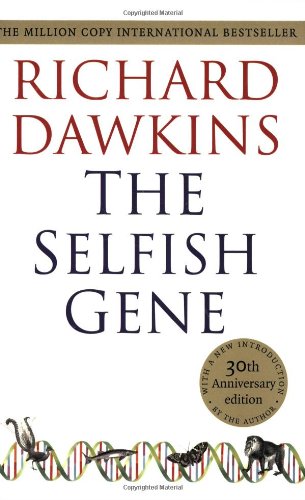
The Selfish Gene
Welcome home! Glad to be back, though really learned a great deal about Trinidad and the challenges the country faces. So I stayed home and read a classic, educational book, The Selfish Gene by Richard Dawkins. This was clearly a classroom read for one of the RAs for a philosophy or pre-med course on the evolution of man. Dawkins presents his view of the evolution of man from the point of view of the “gene” and how populations (whether bird or man) will tend towards an ESS, evolutionarily stable strategy. Dawkins uses Darwin’s work as an underpinning for his arguments and takes them to a new level, the “quality of the gene” which explains a great deal as to the “outcome” of a species or individual animal/other species. How we got this way and how are other species the way they currently exist are investigated. Dawkins provides examples from bats, bees, dogs, and other animals alive today and not. His view on “family planning” for man and the battle of the generations uses a mathematical formula in explaining why we are as we are, and how other groups have become extinct because of the “gene pool.” I hadn’t read the background on the “Prisoner’s Dilemma” previously, though have used in leadership training sessions, so it was well orchestrated to prove his point. Science as a means of explaining our evolution and continued existence intrigues me so I found this a good read for me. I will admit the DNA sections of the book and other hyper-science discussions didn’t really excite me, but happy to gain some insight I wouldn’t have otherwise. Clearly a review of a book of this nature can’t be captured in a paragraph, so if so inclined, grab the highly popular book and have a read. I know I probably lost some of the text’s highlights but I’ll leave them for better minds to pull out for their inquiry into "Why Man?"
Cutting for Stone
As we are ready for take-off back to NYC from Trinidad, I concluded a book on tape, Cutting for Stone by Abraham Verghese. A faculty member of Stanford University Medical School takes the time to write some fiction, nice! It is currently on the best-seller’s listing on the NY Times, and from my take, should be. I really enjoyed the story of the life of the narrator, Marion Stone, a twin, and his life growing up in Ethiopia, yet escapes to the US and receives his medical training. Ah, but why is he there? Well it all begins with the birth of Marion and his twin Shiva. They are born as a result of a moment of love between his mother, a nun, and his father, the local doctor, working together at the Mission. It isn’t until Sister Mary Joseph comes into the emergency room and looks to be dying does anyone know she is even pregnant. Dr. Thomas Stone, the boy’s father, is there to examine her and the other nurse helps to deliver the children as Stone freezes in the birthing process. Amazed that the baby survives the critical condition, another astonishment faces the two, a conjoined twin! Marion and Shiva will never have the chance to grow up with either parent, as mother dies during delivery and Thomas Stone, losing the woman he loves, leaves Ethiopia in the middle of the night. The story of love, politics, war and connecting the dots occurs throughout. This is one of those books that everything questioned actually gets addressed so pay attention to each character and each interaction. The detail that Verghese provides into the characters makes you feel as though you have seen them around your neighborhood, especially in NYC, where in fact Marion moves to complete his residency. It is hard to believe that this is Dr. Verghese’s first book. The intricacy of storyline and intimate knowledge on the subject matter reminded me much of one of my other favorite novels, Shadow of the Wind. I’m not going to ruin the ending of this book, but have no doubt the book will become a movie, no doubt in my mind (hope it isn’t ruined like so many other books). I really enjoyed this book. Add it to your list. Interesting how I finished a book on medical life and didn’t care for it, and the next book randomly selected is from the same field and loved it! A top read for those who are enamored by authors who paint pictures and fully develop characters!
Wednesday, March 16, 2011
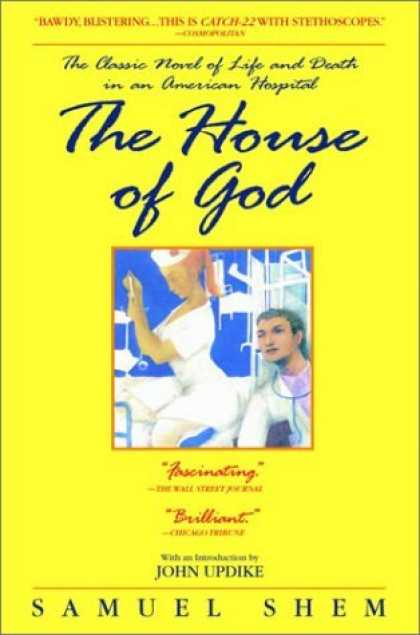
The House of God
Taking the few minutes between activities in Trinidad to do some RA Favorite book reading and made some progress in reading The House of God by Samuel Shem. You really need to find the humor to get into this book. Much like 1L (the book about being a first year law student), this one is its companion but in the field of medicine, being an intern in a hospital (Harvard?), hmm?? In the book the main character, Dr. Roy Basch, is doing his internship year before he has to declare his specialty area of medicine. The story took place in the BMS (Best Medical School) and reads as a pre-cursor of sorts to the TV show Scrubs, though this one was written in 1978 (right after Watergate, and yes references flew throughout). Shem, only a pseudo name as an author, draws from his own experience and describes the craziness of being an intern: the hours, the characters, the LOLs(yes this term existed before the internet and refers to the Little Old Ladies). Shem shares a new set of medical vernacular for the reader, such as “GOMERs” – get out of my emergency room, “ROR” – relationship on the rocks, and “HTE Service” - hold the elevator service. Irreverent to the leadership of the hospital, including his boss, the “Fat Man,” and the various patients and “woman friends” along the way. Do nothing for the GOMERs and they may actually live! The grueling hours and the lack of support are hallmarks, as presented in this tale, of the life of the intern. Read this book and you wonder who would want to be a doctor, that he does so with a sense of humor. Through the sudden death, apparent suicide of one of the chief residents, and the influence of the chief psychiatric resident, all of the interns actually decide to go into the field of psychiatry. What keeps Basch focused and able to finish, his love Berry, who he actually cheats on while away. The story begins and ends with Basch and Berry at the same moment in time with a flashback (or nightmare?) of the past year. At times the book is quite tiring and slow. You really have to be present as the comic moments can be overlooked. Satire and this type of humor is ok, though as a person who tends to faint with blood/needles, the emergency room setting already started me as a reader in the wrong place. Not sure how dated it reads for anyone looking into the medical field, but may hit a chord for you. I actually thought the author had a great ending and bringing it all together. Overall, ok, but have had better reads for sure. Now back to Trinidad.
Sunday, March 13, 2011
Goldman Sachs: A Culture of Success
In Trinidad with the AnBryce scholars but did have some free time to read one of the RA favorite books, Goldman Sachs: The Culture of Success. An interesting read that opened my brain to the Sternites at NYU. The book told the history of the company from its humble beginnings to its decision to sell the private company to the world of IPOs. GS was the last one standing of the biggies to remain private. After a failed 1986 and a 1996 vote of the partners to offer an IPO, Jon Corzine, then Co-Chairman, decided to attempt to sell the company publicly. Why? Well lots of reasons... Was it for greed? Or was it to have enough capital to stay on top as all other competitors were merging and diversifying? Learning about the basement start-up in 1869 in lower Manhattan, the reader learns that Goldman Sachs Group, Inc. developed as a global investment banking and securities firm which engages in investment banking, securities, investment management, and other financial services primarily with institutional clients. The back scene discussions to diversify employees (bringing in woman and minorities) to putting energies into globalizing into the Asia and European markets. Leadership from the beginning, Marcus Goldman and his son-in-law Samuel Sachs, whom he brought into the fold, to Sidney Weinberg, Gus Levy, and Stephen Freidman all are highlighted. As our the last generation of leaders, Robert Rubin, Jon Corzine, and Henry Paulson who all left Goldman to serve in leadership roles in Government which indicate GS outreach and impact on the US financial markets. In many ways the book seemed to be a build up to the IPO, and limited in-depth review of what that culture of success really was, though the change to involving more into decisions near the end gave the reader insight into the change in corporate culture. I would have liked a bit more of that rather than IPO or not. For those entering the financial world, it gives good perspective into the markets, otherwise, left me wanting more. It was ok… not stellar.
Tuesday, March 8, 2011
Bonus Book: The Girl Who Kicked the Hornet's Nest
I have been wanting to finish this book, or should I say trilogy, for some time. The book The Girl Who Kicked the Hornet’s Nest by writer Stieg Larsson I thought was the best of the three books. (Spoilers ahead!) The level of intrigue and complex story began right from the first moment as we find our heroine, Lisbeth Salander, being brought to the hospital after being shot by her half-brother and almost being killed by her father. Surgery is performed on her while her father, Zalanchenko, sits two doors down in recovery. In an attempt to keep the secret “Section” of the underground government a secret (a group Zalanchenko was a member) one of the old timers (Gullberg) who is dying of terminal cancer comes in and kills Zalanchenko and then turns the gun on himself in the hopes to keep the “Section” under wraps. Simultaneously, our hero, Blomkvist, writer for the daily paper Millennium, continues his pursuit to save Lisbeth and also uncover the “Section.” And oh yeah, Lisbeth’s half-brother, the human freak Niedermann, is on the loose killing people and waiting for the moment to kill Lisbeth. Lisbeth, after her recovery, is charged with attempted murder of her father, which is being fueled by members of the Section who are still in control of the government. The trial of Lisbeth is intense. Her lawyer is none other than Blomkvist’s sister. The trial ends with her psychiatrist, the evil Dr. Teleborian, being caught in the lies he crafted regarding Lisbeth’s mental health and he is found to be in possession of child pornography on his computer. Lisbeth is acquitted of the crimes because of the work of Blomkvist with the publishing of the “Lisbeth story” chronicling her abuse by the members of the Section. All of the members of the Section are caught. Lisbeth is freed. The end, far from it. Watch out Lisbeth, your half-brother is going to find you! A great last scene with brother/sister in a duel to the death with the “nail gun” being the pivotal instrument in the demise of…. well, let’s just say things end as they should, happily ever after. Lisbeth and the reporter Blomkvist meeting as the moonlight is in the background (I added the last part of that meeting!). So many turns and twists that this review does it limited justice. A wonderfully crafted story and characters that are of this world. Great read! I look forward for RAs to put this one on the list.
Subscribe to:
Posts (Atom)